
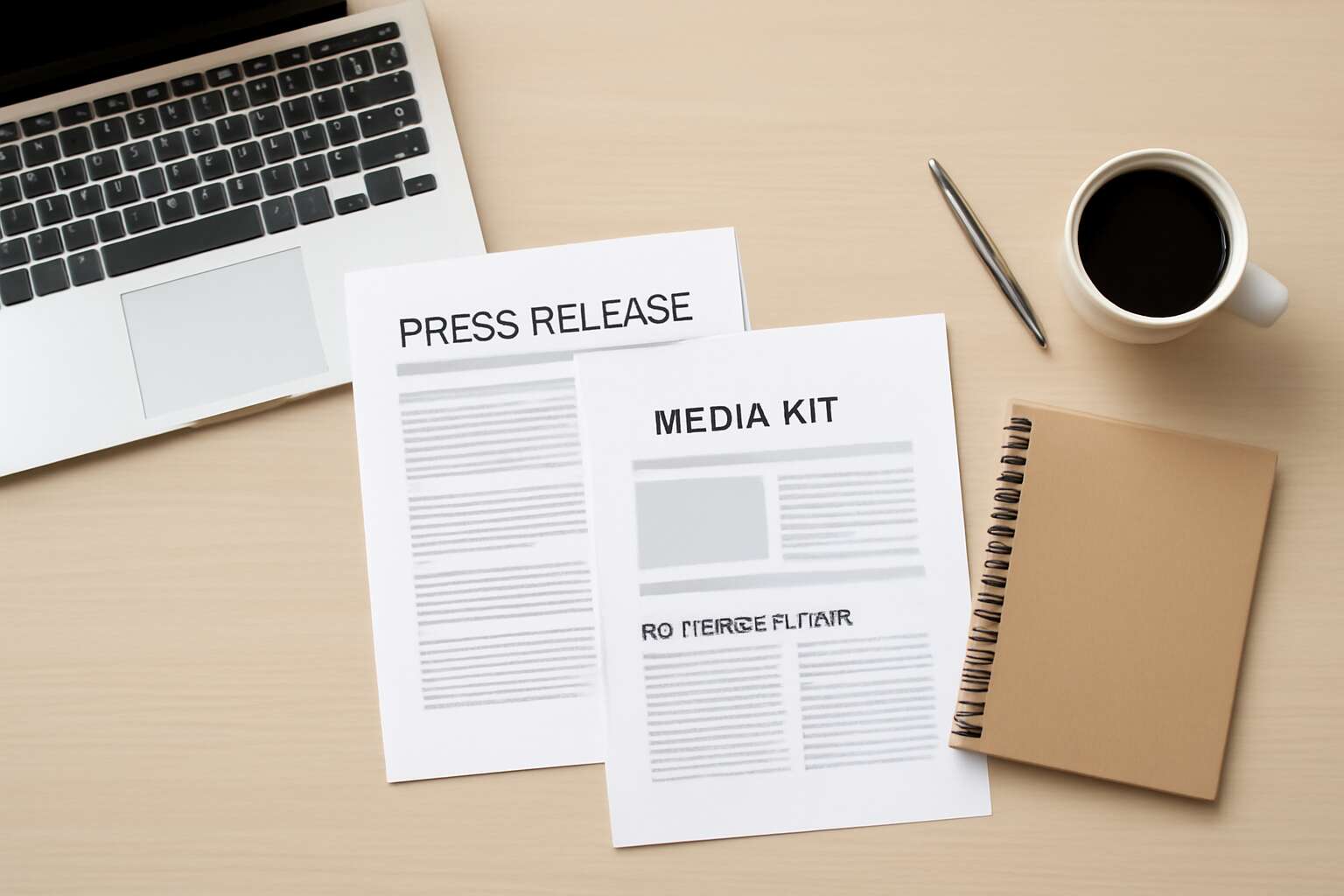
Core PR Documentation and Messaging
Purpose of PR documents and their role in strategy
In South Africa’s crowded media landscape, a single, well-told message travels farther than a flood of buzzwords. Core PR Documentation provides that spine for campaigns, turning scattered ideas into a unified narrative you can carry from press conferences to social posts. public relations documents guide every briefing, release, and interview, shaping how audiences encounter your organisation before a single question lands!
Core components include the essentials that keep teams aligned:
- Press releases and media advisories
- Fact sheets and bios
- A concise messaging house and Q&A
- Media kit and crisis templates
Beyond assets, the messaging purpose of PR documents is to translate strategy into human terms—audience-first, culturally aware, and risk-conscious. When the messaging is anchored in audience insight and governance, every statement supports the same storyline across media, stakeholders, and employees. That coherence is the quiet engine of reputation in South Africa’s diverse markets!
Audience mapping and stakeholder segmentation
In a media landscape where 72% of South Africans form their first impression in seconds, public relations documents act as a lighthouse—guiding the message so it lands with precision, not noise! They anchor campaigns, turning scattered ideas into a single, navigable narrative that travels from the briefing room to the feed.
Messaging Audience mapping and stakeholder segmentation translate strategy into human terms. It begins with knowing who matters, what they care about, and where they seek shelter in a crowded media sea.
- Identify primary audiences by influence and interest
- Map stakeholders to messaging priorities and trusted channels
- Craft lightweight statements tailored to each group
With governance and audience insight at the core, the same storyline travels across press, online, and workplace corridors. In South Africa’s diverse markets, coherence becomes the quiet engine behind a robust reputation.
Key messaging framework and storytelling pillars
In a landscape where 72% of South Africans form their first impression in seconds, public relations documents anchor the narrative and set the rhythm for campaigns from briefing room to feed.
- Core messages that survive platform drift
- Messaging hierarchy guiding what lands first
- Channel-appropriate tone without losing personality
The key messaging framework and storytelling pillars turn a strategy into a living narrative, harmonising press, online chatter, and workplace corridors. In South Africa’s diverse markets, coherence becomes the quiet engine behind a robust reputation, governed by tone, truth, and tasteful restraint.
Brand voice, tone, and consistency guidelines
In South Africa, first impressions crystallize in seconds—72% are formed before the eye is fully open. That reality makes core PR documentation the metronome for campaigns, setting rhythm from briefing room to feed—and we know momentum matters!
These public relations documents anchor the brand voice. They outline a concise messaging stack, define a tone that travels across platforms, and provide templates that keep the story stable under pressure.
- Voice and tone guidelines that translate across channels
- Channel-specific variants that stay coherent
- Approval workflows and version control to prevent drift
In South Africa’s diverse markets, consistency matters. The guidelines ensure truth and tasteful restraint guide every line, so audiences receive the same story in a newsroom, a boardroom, or a social feed.
PR Document Formats and Templates
Press releases standard structure and elements
Punchy and precise, PR document formats and templates turn noise into signal. “Clarity is the fastest route to coverage,” editors say, and that’s true in South Africa’s fast-moving media scene. A well-chosen template trims delays, elevates credibility, and helps every release feel ready to publish.
Formats guide writers to predictable, scannable content.
- Press release — lead, body in concise paragraphs, boilerplate, and media contact.
- Media advisory — event details, time, venue, and key angles for reporters.
- Fact sheet — one-page snapshot of company, products, leadership, and milestones.
Templates keep standards steady across teams and channels. They support version control, archiving, and easy localization for South Africa’s multilingual audiences, while ensuring every document reinforces the brand. In this framework, public relations documents become precise tools for credibility and speed.
Media advisories and outreach pitches
South Africa’s fast-moving media cycle rewards crisp public relations documents: editors often decide within minutes whether a concise media advisory earns a second look. When formats and templates guide media advisories and outreach pitches, noise becomes signal and credibility follows quickly.
Templates steer predictable, scannable content. For media advisories, include event details, time, venue, and angles reporters care about. For outreach pitches, craft sharp subject lines and a one-paragraph hook that hints why the story matters today.
Consider a compact library of components that travels well across languages and channels:
- Media advisory essentials: date, venue, time, contact, angles
- Outreach pitches: tailored angles, subject lines, spoiler-free summaries
- Boilerplate and contact blocks: branding, localization-ready
In South Africa’s multilingual market, these templates do more than save time; they carry brand voice across languages, dialects, and feeds.
Fact sheets and backgrounders for quick briefings
In South Africa’s crowded media landscape, crisp PR documents grab attention fast. A well-built briefing starts here: public relations documents that distill complex stories into clear, shareable bites.
Fact sheets and backgrounders are the quick briefing tools. They organize data, charts, and sources into digestible packs editors can skim—forever ready for doorstep requests.
- Fact sheets
- Backgrounders
- Briefing notes for quick reads
Branding and localization flow through these formats, letting your message travel cleanly across languages and feeds while keeping the core story intact!
Media kit components and assemble guidance
In South Africa’s crowded media landscape, editors decide in the first seven seconds whether a story deserves a closer look. Crisp PR document formats and templates are the first line of defense for a compelling public relations documents narrative.
The following core elements often populate a kit:
- Cover letter and executive summary
- Company profile
- Fact sheet with key data
- Backgrounder with context and sources
- Press release or advisory
- Spokesperson bios and FAQs
Templates should be modular and localization-friendly, aligned with branding. In SA, versions in multiple languages and formats support email, portals, or offline briefings. When used consistently, these templates ensure public relations documents travel across departments without losing the core message.
Across feeds and desks, formats and kits keep a story inevitable, not optional. What a difference that makes!
Q&A sheets for spokespersons
In South Africa’s bustling media maze, seven seconds can decide a story’s fate, yet crisp PR document formats give it staying power. PR Document Formats and Templates anchor the spokesperson’s narrative, turning scattered notes into a focused chorus. These templates are modular and localization-friendly, ready for English, Afrikaans, and isiZulu, and adaptable for email, portals, or offline briefings. When used consistently, they safeguard the core message as it travels across departments, shaping the public relations documents narrative into a coherent whole — a rhythm I’ve seen editors respect and rely on.
For spokespersons, a Q&A sheet keeps responses sharp and on-brand, ensuring a calm cadence when questions rise.
- Anticipated questions
- Core facts and figures
- Approved talking points and tone
Workflow, Governance, and Collaboration
Approval workflows and sign-off points
In South Africa, a recent survey found that 58% of PR campaigns stall at the sign-off gate, delaying coverage and eroding trust. That makes a clean path for public relations documents essential—flowing from draft to distribution with care.
Workflow design pairs governance with everyday collaboration. Roles are clear, version control is tight, and timelines stay realistic. A centralized review space keeps conversations focused, while governance establishes a sign-off cadence with defined owners and deadlines.
- Draft content aligned to brand guidelines.
- Fact-check and sourcing verification.
- Final approval and distribution scheduling.
Collaboration thrives when feedback is transparent, with decisions clearly recorded. Sign-off points guard quality and momentum, ensuring that public relations documents carry truth and care through every channel.
Version control, naming conventions, and archiving
In South Africa, 58% of PR campaigns stall at the sign-off gate, a stark reminder that smooth workflows matter. The bridge from draft to distribution is where public relations documents gain or lose momentum.
Governance with everyday collaboration keeps that bridge intact. Roles are defined, version control is tight, and a centralized review space keeps conversations focused. A clear sign-off cadence with owners and deadlines seals quality.
- Version control tracks edits and authors across drafts
- Naming conventions standardize file titles and dates
- Archiving preserves context and facilitates future retrieval
Collaboration thrives when feedback is transparent and decisions are recorded; this ensures these documents carry truth through every channel. Consistent governance and disciplined archiving prevent misalignment and loss of trust.
Roles and responsibilities in the PR docs process
The bridge from draft to distribution hinges on workflows that don’t stall. In South Africa, 58% of PR campaigns stall at the sign-off gate, a stark reminder that smooth flows matter. The backbone is built into public relations documents that travel cleanly from author to approver, guided by quiet, unyielding momentum.
Governance stamps authority on decisions, assigns owners, and fixes cadence.
- Content owner who holds final responsibility
- Approver who signs off on core messaging
- Compliance reviewer who checks regulatory and ethical safeguards
Collaboration thrives when feedback is transparent and decisions are recorded, so momentum stays intact across channels. When teams comment openly and track approvals, these public relations documents carry truth into every briefing, pitch, and post.
Editorial calendars and cross-team coordination
Momentum is the quiet backbone of campaigns; in South Africa, 58% stall at the sign-off gate. That means public relations documents must glide from draft to distribution, guided by a clean, time-boxed workflow that keeps people moving rather than waiting.
Governance stamps authority on decisions, assigns owners, and fixes cadence. The trio that keeps it all humming includes a content owner who holds final responsibility; an approver who signs off on core messaging; and a compliance reviewer who checks regulatory safeguards.
Collaboration thrives when feedback is transparent and decisions are recorded, so momentum stays intact across channels. When teams comment openly and track approvals, these public relations documents carry truth into every briefing, pitch, and post.
- Editorial calendars align PR, marketing, digital, and executive teams
- Cross-team coordination keeps deadlines realistic and visibility high
- Shared dashboards capture approvals and revision notes
Compliance, Legal, and Risk Management
Copyright, attribution, and fair use guidelines
A veteran PR chief once quipped, ‘If it isn’t documented, it didn’t happen.’ That punchy line sums up why compliance, legal, and risk management sit at the core of public relations documents. In a world where a single line can spark a lawsuit or a viral misunderstanding, careful framing isn’t just nice-to-have—it’s mandatory.
Copyright, attribution, and fair use guidelines are not afterthoughts; they are the guardrails that protect your organization and your credibility. In South Africa, ensure you have rights to images, use quotes with attribution, and respect fair dealing for news reporting and analysis. When in doubt, treat assets as borrowed until confirmed.
Here are quick guardrails that fit naturally in the documentation workflow:
- Always verify rights for images and graphics
- Label third-party quotes with clear attribution
- Respect fair use boundaries when excerpting content
A robust risk lens helps you steer clear of reputational potholes and legal trolleys.
Fact-checking, accuracy protocols, and source verification
A sharp statistic lands first: 76% of executives say reputational damage begins with unchecked facts. In the world of PR, that means every sentence must pass a fact-check faster than a barista can pull a double shot.
Compliance, legal, and risk management aren’t box-tickers; they’re the brakes on the PR engine. Robust accuracy protocols and source verification let claims be traced to verifiable origins. This is especially true for public relations documents in South Africa, where rights and fair dealing rules guide how quotes, images, and data are used.
To keep the process lean, a compact checklist works inside the workflow.
- Verify rights and licenses for assets
- Cross-check dates, figures, and names against primary sources
- Log sources and timestamps for audits
Disclaimers, legal reviews, and regulatory compliance
In a climate where one misattributed quote can spark a reputational fire, compliance, legal, and risk management are the brakes on the PR engine. In South Africa, rights and fair dealing rules steer how quotes and imagery travel, and every public relations document benefits from a clear, compliant review!
Disclaimers and structure play a role in keeping the line of sight clear, and the following safeguards help keep everything within bounds:
- Disclaimers for data and sources
- Legal reviews and sign-offs
- Record-keeping and audit trails
Disclaimers clear the path for audiences and protect the brand from unintended misinterpretation. A disciplined approach to regulatory compliance keeps campaigns nimble while meeting South Africa’s privacy, copyright, and consumer-protection statutes. The result is a narrative that travels fast yet lands with legitimacy and grace.
Record keeping, privacy, and accessibility standards
An old PR maxim holds true: the fastest truth travels beside the fastest headline. In South Africa, the discipline of compliance isn’t a drag; it’s the quiet engine that keeps reputations intact as stories multiply. POPIA, copyright guardrails, and accessibility standards aren’t bureaucratic gatekeepers; they are the backbone of every public relations document, shaping what lands with audiences and what stays out of misinterpretation.
Key foundations for governance include:
- Record-keeping and audit trails that document decisions and approvals
- Privacy protections aligned with POPIA that minimize data exposure
- Accessibility practices ensuring content is perceivable, operable, and navigable
With these pillars in place, public relations documents travel with authority across diverse South African audiences, building trust and credibility in a landscape where missteps echo quickly. The careful fusion of governance and storytelling keeps campaigns nimble yet legitimate!



0 Comments